
OHH! WEDDING Journal
Lake Como or Tuscany for an Indian destination wedding?
Is Lake Como or Tuscany better for an Indian wedding?
Neither is universally better. Lake Como tends to suit a celebration that wants hotels close together, water as a real means of movement, and guests who can accept boats and a lakeside road. Tuscany tends to suit a celebration that wants several events on one estate — or can live with countryside distances — and arrivals through Florence, Pisa or, for some long-haul groups, Rome then rail.
The useful comparison is operational, not which landscape photographs more kindly. Dedicated notes live at Indian weddings on Lake Como and Indian weddings in Tuscany. This article is the decision between them.
Side by side
| Question | Lake Como | Tuscany |
|---|---|---|
| Geography | A concentrated shoreline. Towns sit close; the water is a corridor as well as a view. | Countryside and hill towns. Space is the point; hotels are not always next door. |
| Where guests usually sleep | Hotel concentration, a buyout, or a villa plus overflow. Villas rarely sleep everyone who flew. | One estate if beds, kitchens and indoor rooms are honest; otherwise a town, a second house, or Florence/Siena overflow. |
| Several events, one address | Possible in a hotel or buyout. Moving between a garden and a later room often involves the lake road or a boat. | Often the reason to choose Tuscany — if the property can reset rooms overnight and still host guests. |
| How guests move | Cars, coaches with turning limits, and boats. Public ferries on the lake are operated by Navigazione Laghi; private boats are a separate plan. Water has weather and timetable limits. | Road transfers. Rural lanes, harvest traffic and hilltop gates shape whether a dusk ceremony and a later party can share one day. |
| Production access | Trucks still arrive by land even when guests arrive by water. A landing stage is not a loading dock. | Load-in on country roads. Power, kitchens and a place to park a truck matter as much as the cypresses. |
| Typical arrival pattern | Milan-area airports: Malpensa and Linate (SEA), and Bergamo Orio al Serio / Milan Bergamo (SACBO). Como has no commercial airport of its own. | Florence or Pisa for many groups; Rome as a long-haul gateway then high-speed rail toward Florence, then road to the estate. |
| Weather contingency | Lake wind and rain. Indoor rooms for any chapter that cannot wait for a clearer hour. | Inland storms and summer heat. The same rule: an indoor room that can actually hold the event. |
| Pre- and post-wedding days | Stay on the lake, a night in Milan, or the mountains. Swiss approaches exist for some itineraries; they are not assumed. | A city night in Florence before the hills, the coast afterwards, or a slower town. The estate is rarely the whole of Italy. |
Lake Como, read as logistics
Lake Como can concentrate a travelling family because hotels already sit along a relatively short shoreline. That is the operational advantage: a room block, two neighbouring houses, or a buyout can keep the group from dissolving into a long transfer every morning.
The constraint is movement. A Baraat, where it belongs, cannot treat a narrow lakeside road as a parade ground at the same hour as local traffic. Coaches need somewhere to turn. Navigazione Laghi runs the public ferry network; a wedding cannot assume those timetables, or private boats, will hold in wind. Production still arrives by road. Luggage to a villa that is only reachable on foot from a landing stage is a different problem from a hotel with a forecourt.
Milan Malpensa is SEA’s intercontinental airport for the Milan system; Linate is SEA’s city airport, close to Milan itself. Bergamo Orio al Serio, operated by SACBO and marketed as Milan Bergamo, is a third Milan-area gateway. Which one a guest list should use depends on the airline, the shore of the lake, and whether the first night should be Milan or the water. Transfer times vary with traffic, the exact town, and the hour — they should be planned for the brief, not quoted as a single number.
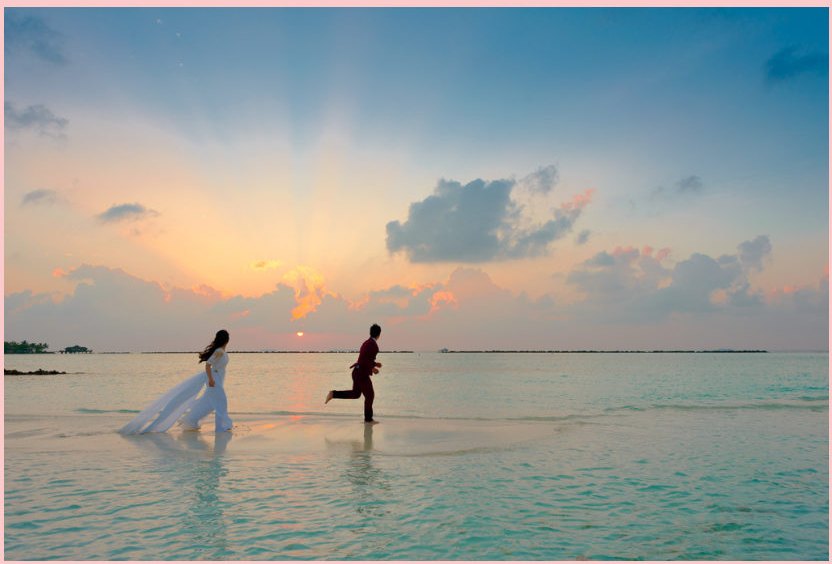
The lake is a corridor. Guests and production do not always travel it the same way.
Tuscany, read as logistics
Tuscany often asks the opposite question: can one estate hold the weekend? Welcome, a Haldi or Mehndi where they belong, ceremony and dinner can share an address if beds, kitchens and indoor rooms are honest. If they are not, guests scatter to a second villa or a town hotel, and the wedding becomes a transfer schedule — workable when designed, tiring when improvised.
Florence (Amerigo Vespucci) and Pisa (Galileo Galilei) are the two principal Tuscan airports, operated together as a complementary system by Toscana Aeroporti. Many international guests still land in Rome and continue by high-speed train toward Florence Santa Maria Novella; the rail corridor is frequent, but the day’s timetable should be checked with Trenitalia or Italo rather than treated as a fixed duration. A first night in a city is often kinder than a rural gate after a long-haul flight.
Indoor and outdoor programming is not optional decoration. A multi-day Indian celebration still needs rooms that can hold a Sangeet, a dinner or a ceremony if the afternoon wind arrives. That is the same professional rule as Como; the geography that fails is different — heat and distance rather than lake timetable.
Which type of celebration may suit each
Lake Como may suit a family that wants hotel concentration, a water chapter, and guests who can accept boats and a lakeside road — and whose production can still arrive by land. It is a weaker fit when a large Baraat needs a wide route, when every event must sit on one estate with every guest in residence, or when the group cannot absorb a water timetable.
Tuscany may suit a family that wants several events on one property, countryside privacy, and a weekend that does not change hotels. It is a weaker fit when overnight capacity is wishful, when night returns from a town dinner have not been written, or when the first landing cannot be given a city night.
Using both — a Como welcome and a Tuscan ceremony, for example — asks two geographies, two arrival plans and two production load-ins. It can be designed; it is usually two celebrations, not a convenience. Italy as a wedding country is mapped on destination weddings in Italy and, for this cultural brief, on Indian weddings in Italy.
The next decision
If the lake already feels like the answer, read the Como notes next. If the estate does, read Tuscany. If the question is still which events belong in the programme, start with planning a multi-day Indian wedding in Italy. The outline itself begins as a conversation.